
Defense Legend 5: Survivor TD
GCenterStrategy
4.3732.00 Reviews
- Version
- 1.0.74
- Installs
- 1.00M
- Age Rating
- Everyone 10+
Screenshots

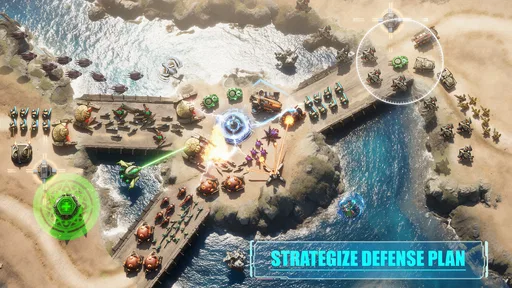
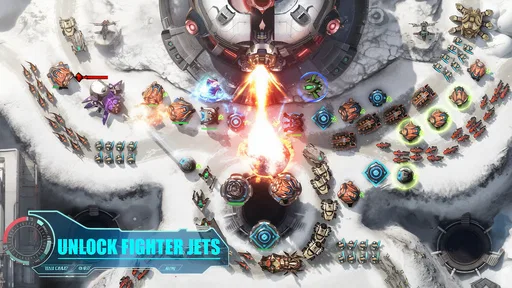
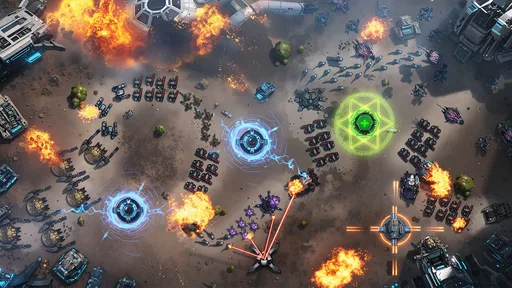

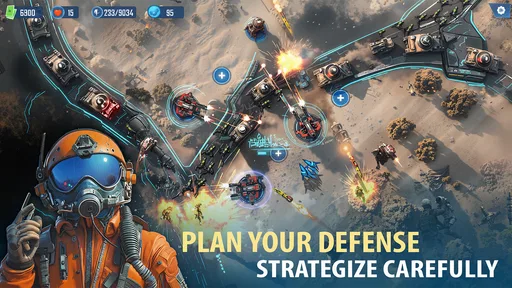
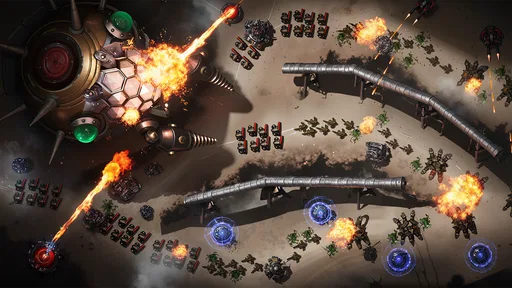
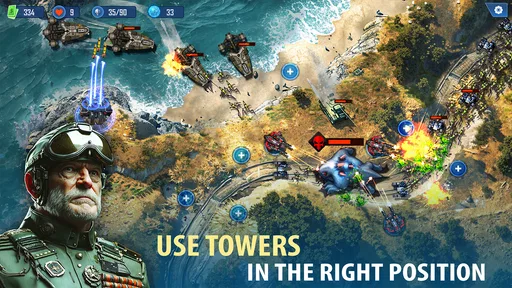
Our Review of Defense Legend 5: Survivor TD
 Analysis by Appyee
I approached Defense Legend 5: Survivor TD as a strategy game for short defensive sessions rather than a title that asks for a whole evening at once. Its basic idea is easy to understand: protect peace by building a defense plan, then adjust that plan when the pressure changes. That sounds familiar if you have played tower-defense games before, but the appeal here comes from deciding what deserves attention first instead of simply placing the strongest option everywhere.
The game is developed by GCenter and is free to download, which makes it easy to try without committing money at the start. It is rated for Everyone 10+, runs on Android 7.1 or later, and the current version is 1.0.74. Those details matter more than they may seem: this is an accessible mobile strategy game, but it is not aimed at very young children, and older Android devices may need checking before installation.
How the current game feels in practice
My first impression was that Defense Legend 5: Survivor TD wants me to think in terms of defensive priorities. The satisfying part is not merely watching enemies approach a base. It is deciding which threat needs an answer immediately, which lane can survive for a little longer, and whether spending resources now will leave me exposed later. That creates a useful rhythm between observation and action.
The “survivor” angle also gives the game a more active mood than a completely passive tower-defense experience. I do not treat each stage as a puzzle that can be solved once and forgotten. I keep an eye on how the defense is holding, then make changes when the situation becomes uncomfortable. For players who enjoy reacting under pressure, that is more engaging than a simple placement-and-wait formula.
At the same time, this is not the right choice if you want a deep, story-heavy strategy game with long conversations, detailed world-building, or a large management layer. The focus is defense. I would recommend it to someone who likes mobile strategy built around positioning, timing, and gradual improvement, not to someone looking for a full-scale civilization simulator or a competitive board-game adaptation.
The most useful way to approach each stage
I found it more effective to think about the map as a sequence of problems rather than one large battlefield. First, I look for the places where enemies are likely to remain exposed for the longest time. A defensive position that can affect several parts of a route is usually more valuable than one that looks powerful but only covers a short stretch. This is an easy mistake to make when a new stage presents several tempting locations.
My second step is to avoid spending everything during the opening moments. A comfortable start can be misleading. Holding back enough resources for an unexpected push gives me room to correct a weak setup instead of watching the defense collapse with no options left. This is one of the less obvious lessons in a game like this: the best early move is not always the move that produces the most immediate damage.
I also recommend changing one part of the defense at a time when a stage goes badly. If I rebuild everything at once, I cannot tell whether the problem was poor placement, weak timing, or an upgrade decision. A smaller adjustment makes the next attempt more informative. That approach is especially useful for players who dislike repeating a level without understanding what went wrong.
Where the strategy has real depth
The game becomes more interesting when I stop judging defensive options only by their apparent strength. Coverage, timing, and the order of improvements can matter just as much. A modest defensive choice placed where it influences several enemy approaches may contribute more than an expensive choice isolated at the edge of the map. That trade-off gives the stages a tactical character without requiring complicated controls.
Another useful habit is to separate problems into “damage,” “survival,” and “timing.” If enemies are reaching the protected area, the answer may not always be more attack power. Sometimes the defense needs better coverage or a better moment for an ability. When I identify the actual failure instead of reacting emotionally to the final wave, my retries become much more productive.
This is also why the game can work well in short everyday sessions. If I have a few minutes while waiting for an appointment, I can play a stage or revisit a difficult section with one specific experiment in mind. I do not need to remember a complicated long-term campaign plan to get value from a short session. The downside is that players who prefer uninterrupted, story-driven play may find this stop-and-start structure less absorbing.
What the current release tells existing players
The current version, 1.0.74, is the clearest practical sign that the game is being maintained beyond its initial launch. Defense Legend 5: Survivor TD was released on Jun 24, 2023, so the present build represents a later point in its life rather than the launch version. I would still separate that fact from any assumption about a particular feature or balance change: a newer version suggests ongoing evolution, but it does not by itself explain every adjustment made along the way.
For someone already playing, the sensible approach is to judge the current build by how it feels on the device being used. If the game runs smoothly and the defensive loop remains enjoyable, there is little reason to treat the original release as the benchmark. Mobile strategy titles often feel different after refinements, even when their central idea stays the same. New players, meanwhile, can start with the present version instead of worrying about how the opening experience may have changed since launch.
The game has reached more than one million installs and holds a 4.3 average from roughly thirty-four thousand ratings, with 732 written reviews. I read those figures as evidence of a substantial audience, not as a guarantee that every player will enjoy the same pacing or progression. Popularity makes it easier to find a game worth trying, but the important question is whether its particular defensive loop matches your habits.
Existing users should also remember that a free game can still shape the way they play. If progress begins to feel slow, the temptation is to spend immediately rather than reconsider the strategy. I prefer to replay a stage with a different opening plan first. That costs time instead of money and often reveals whether the real obstacle is a weak defense or simply an inefficient sequence of decisions.
Free access and the spending decision
The game is free, but it includes in-app purchases ranging from $0.49 to $74.99 per item. That wide range is worth noticing before starting. A low-cost optional purchase may feel harmless, while the highest-priced item represents a much more serious decision. I would set a personal limit before playing, especially if the game is being used on a shared family device.
My advice is to treat purchases as a convenience choice, not as the main solution to a difficult stage. If spending becomes necessary for every frustrating section, the experience loses the strategic satisfaction that makes tower defense appealing in the first place. Players who strongly dislike in-app purchase pressure should approach cautiously, even though the initial download does not require payment.
There is also a practical difference between “free to try” and “free from friction.” A player who enjoys gradual progress and repeated attempts may find the model acceptable. Someone who wants every option available immediately may become impatient. That distinction is more useful than simply calling the game free, because it explains who is likely to feel comfortable with its structure.
Where it compares well with familiar alternatives
Compared with a very casual tower-defense game, Defense Legend 5: Survivor TD asks for more active attention. I cannot rely entirely on placing a few defenses and letting the stage solve itself. That makes it a better fit for players who want their choices to matter during a run, although it may feel demanding when I only want something relaxing in the background.
Compared with a large strategy game, it is easier to pick up. I do not need to manage a broad economy, diplomatic relationships, or a huge map before reaching the interesting decision. The trade-off is a narrower kind of strategy. The pleasure comes from defending a situation, not from shaping an entire society or campaign. If you want a compact tactical loop, that focus is a strength; if you want variety across many systems, it may feel limited.
It also sits between pure reflex play and slow planning. I have time to consider my setup, but I still need to respond when the defense is threatened. That middle ground is the reason I would suggest it to a friend who likes strategy but does not want a complicated control scheme. It is less suitable for someone who prefers either completely hands-off progression or fast action with almost no planning.
Small habits that improve the experience
I would play with sound enabled at least during the first few sessions, if the device environment allows it. Audio feedback can help me notice that something is happening while my eyes are focused on another part of the defense. I would not call this essential, but it supports the habit of scanning the whole stage instead of staring at one successful lane.
I also avoid upgrading automatically just because an option is available. Before committing, I ask whether the improvement solves the problem that actually ended the previous attempt. If the base was overwhelmed because enemies slipped through an uncovered route, increasing damage in a different location may only make the setup look stronger without making it safer.
For a difficult stage, I sometimes use the first attempt as reconnaissance. Rather than trying to win immediately, I watch where the pressure builds and note when my plan stops working. On the next attempt, I make one deliberate change. This turns failure into information and reduces the feeling that progress depends on luck.
A further trade-off is attention. Because the game rewards checking the defense, it is not ideal while walking, commuting in a crowded place, or multitasking heavily. I would save it for a moment when I can look at the screen properly. That is a simple safety and usability point, but it also improves the strategy: distracted decisions make a carefully designed defense feel unfair when the real problem is divided attention.
Remaining gaps and who should skip it
The main limitation is focus. Defense Legend 5: Survivor TD is built around one central promise, and players who do not enjoy repeating defensive situations may run out of enthusiasm. I would skip it if I need a strong narrative reason to continue or if I dislike learning through failed attempts. The game’s appeal depends on finding satisfaction in refining a plan.
I would also hesitate to recommend it to children below the listed Everyone 10+ age guidance. The rating is not just a label to ignore when choosing a game for a family device. Adults should also consider whether the in-app purchase range fits the way the device is shared and whether purchasing controls are configured appropriately.
Players with older Android hardware should check compatibility because the minimum operating-system requirement is Android 7.1. Even when a device meets that requirement, the quality of the experience can depend on the phone or tablet itself. I would install it on the device where I intend to play and pay attention to stability before investing time or money into progression.
Another gap is that the game may not satisfy people searching for a social strategy experience. If your favorite part of the genre is direct competition, cooperation, or comparing elaborate long-term builds with friends, a different title may be a better match. This one makes more sense as a personal tactical challenge, where improvement comes from understanding the defense rather than from social interaction.
What I would watch as the game continues
Because the current build is 1.0.74, I would watch how future updates affect balance and progression rather than assuming that every change will automatically improve the experience. In a defense game, even a small adjustment can change which placements feel worthwhile and how quickly a player recovers from a mistake. The healthiest evolution would preserve meaningful decisions without making older strategies suddenly feel pointless.
I would also pay attention to how the free-to-play structure develops. The price range already stretches from a small purchase to a much larger one, so the important question for players is whether optional spending remains optional in practice. A good long-term experience should let patient players experiment and improve, while keeping purchases understandable rather than making frustration the main reason to buy.
For returning players, the best sign will be whether new versions make the core loop more readable and varied without burying it under extra systems. For newcomers, the present version is the relevant starting point. I would not wait for an imagined perfect update; I would try the current game, decide whether the defensive decisions feel rewarding, and then continue only if the pacing suits me.
My recommendation
After spending time with it, I see Defense Legend 5: Survivor TD as a solid choice for Android players who want a focused strategy game with an approachable entry point and enough tactical pressure to make retries meaningful. The free download lowers the barrier to testing it, while the current version shows that the game has moved beyond its original release. GCenter has a clear foundation here: protect the position, learn from the breach, and improve the next plan.
I would recommend it to a friend who enjoys tower defense but wants to make active decisions instead of watching a fixed setup run. I would especially suggest trying the reconnaissance approach: observe the first failure, identify the real weakness, and change only one part of the defense. That method reveals the game’s strongest quality, which is the way a bad result can become a useful lesson.
I would not recommend it to someone who wants a completely free experience with no purchase prompts, a rich narrative, or a broad multiplayer strategy layer. Its limitations are tied closely to its strengths. The focused defensive loop is approachable, but it can also become repetitive; the free entry is convenient, but the purchase range deserves attention; the active strategy is rewarding, but it asks for concentration.
My final view is simple: try it if you like turning defensive mistakes into better plans. Give it a fair test across several sessions, keep spending decisions deliberate, and judge it by the quality of its tactical choices rather than by the promise of endless variety. For the right player, that focused challenge is enough to make this free strategy game worth keeping installed.
Verdict
Strengths of Defense Legend 5: Survivor TD
- Strategic tower placement makes each wave feel rewarding.
- Multiple heroes add variety to different defensive strategies.
- Short battles fit well into quick mobile gaming sessions.
- Progression systems provide goals beyond simply clearing stages.
- Clear visuals make enemy movement and battlefield threats easy to follow.
Limitations of Defense Legend 5: Survivor TD
- Later stages can become heavily dependent on upgraded units.
- Energy or waiting systems may limit extended play sessions.
- Some menus and upgrade options feel overwhelming for new players.
- Repeated enemy waves can make the campaign feel predictable.
- Performance may drop slightly during crowded battles on older devices.
Other Releases by GCenter
View All
WindWings: Galaxy attack Pro
Arcade4.6

Tower Defense Legend 5 Pro
Action4.3
Similar Picks in This Category
View All
Clash of Clans
Supercell4.5

Plants vs. Zombies™
ELECTRONIC ARTS3.7

Lords Mobile: Kingdom Wars
IGG.COM4.5

Clash Royale
Supercell4.4

State.io — Conquer the World
CASUAL AZUR GAMES4.1

Car Driving School : Car Games
Spark Game Studios3.9
Frequently Asked Questions
What is Defense Legend 5: Survivor TD?
Defense Legend 5: Survivor TD is a tower defense and survival strategy game for mobile devices. You defend your base against increasingly dangerous enemy waves by placing and upgrading defensive towers, managing resources, and choosing suitable combat tactics. The game combines traditional lane-based tower defense with progression and survival-style challenges, making each stage require more planning than simply placing the strongest available unit.
Can Defense Legend 5: Survivor TD be played offline?
Many of the game’s core missions can generally be enjoyed without a constant internet connection, which is useful when traveling or playing in areas with limited coverage. However, certain features may require connectivity, including advertisements for optional rewards, updates, account synchronization, special events, or in-app purchases. Availability can also vary by platform and game version, so checking the store description after installation is recommended.
Is Defense Legend 5: Survivor TD free to download and play?
Defense Legend 5: Survivor TD is typically available as a free download, allowing players to begin the campaign without paying upfront. Nevertheless, free-to-play elements may include optional advertisements, rewarded videos, or in-app purchases for resources, upgrades, and other conveniences. You can usually progress through the game without spending money, although patience and careful resource management may become increasingly important in later stages.
Does the game require strategic planning, or can players win by upgrading towers?
Upgrading towers is important, but it is not the only factor that determines success. Enemy types, attack routes, defensive range, damage specialization, and the timing of abilities all affect the result of a battle. A tower placed in the wrong position may perform poorly even when fully upgraded. Players should experiment with different combinations and adapt their defenses to each stage’s enemy lineup.
Is Defense Legend 5: Survivor TD suitable for beginners?
The game is approachable for beginners because its basic mechanics are easy to understand: place defenses, stop enemy waves, collect resources, and improve your units. As the campaign progresses, however, stages become more demanding and introduce stronger enemies or more complex tactical decisions. New players should learn each tower’s role, avoid spending resources too quickly, and replay earlier levels when they need additional practice or progression.
Play our best games!


